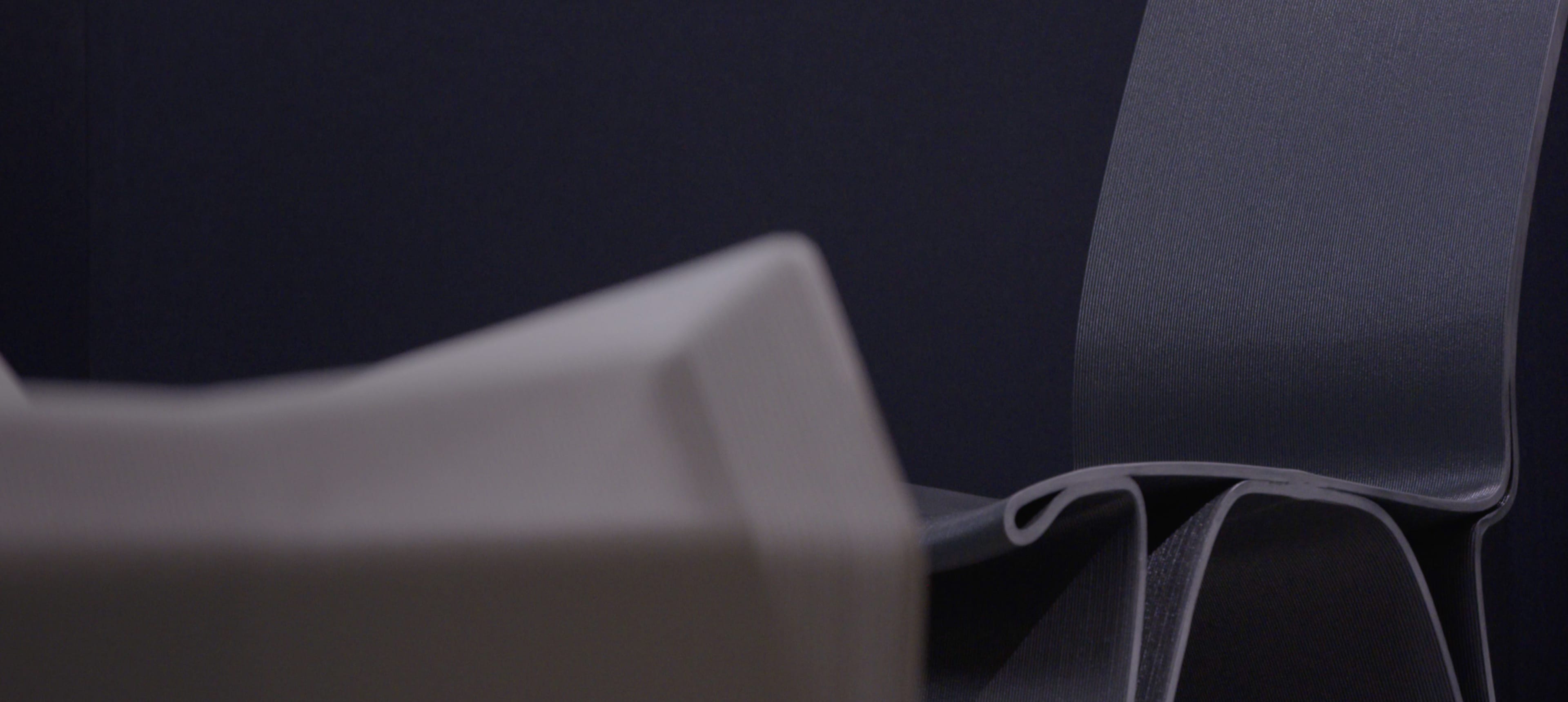
Faster. Simpler. Cheaper. Smarter. Better for the Planet Too.

How additive manufacturing is unlocking new possibilities for the built world.
From Furniture to the Future of the Built Environment
Our first proof point is furniture. The LayerMade Collection is already furnishing HITT Contracting’s new headquarters in Falls Church, VA with more than 600 workstations and offices. But the platform behind it is built to go further. We’re actively developing 3D-printed lighting, architectural panels, and custom formwork and tooling, with more applications in the pipeline.

Creativity and Complexity
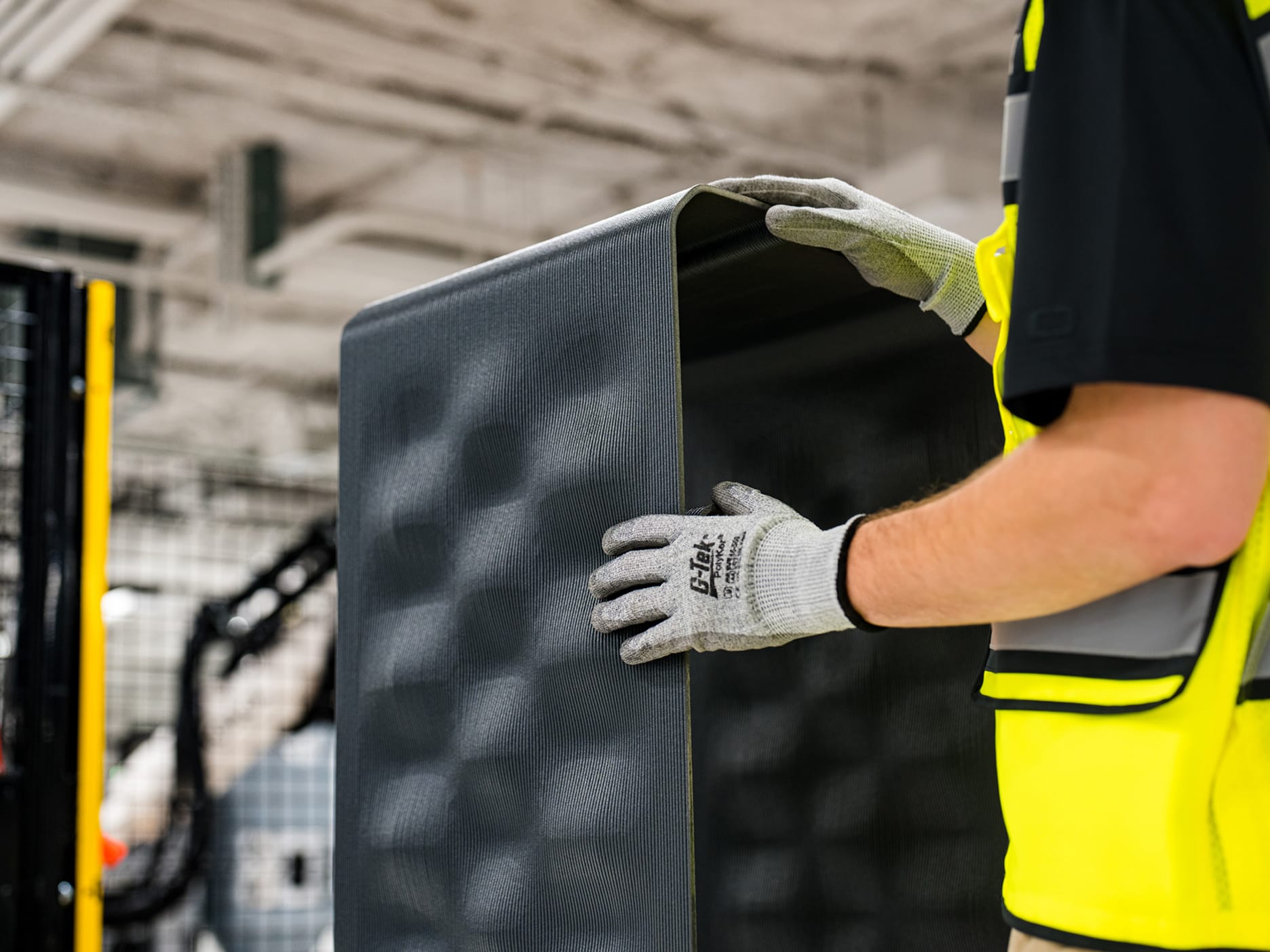
3D printing efficiently recreates features that were traditionally hand-carved or handmade, without being held back by scarce labor or long lead times. It also makes it possible to cost-effectively produce complex forms – including interior channels that are difficult or impossible with traditional methods. Robotic arms add 6-axis movement open up design possibilities beyond gantry-style 3D printing.
Digital Supply Chain
Localizing production minimizes logistics costs, risk, and delay while creating opportunities for local communities. Digital designs can be sent to production facilities anywhere in the world, often within seconds – enabling greater control, transparency, and responsiveness.
Speed Without the Slowdowns
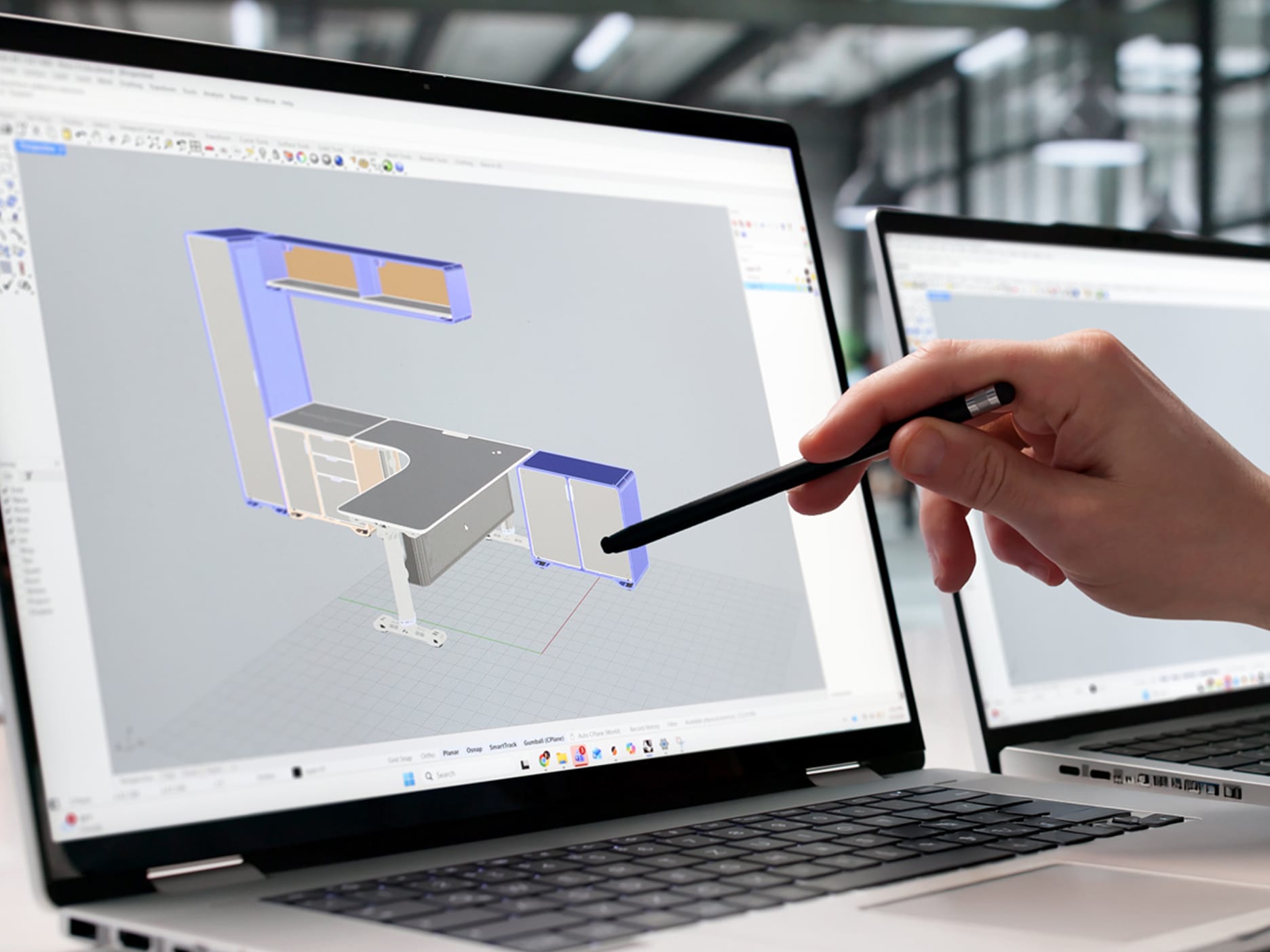
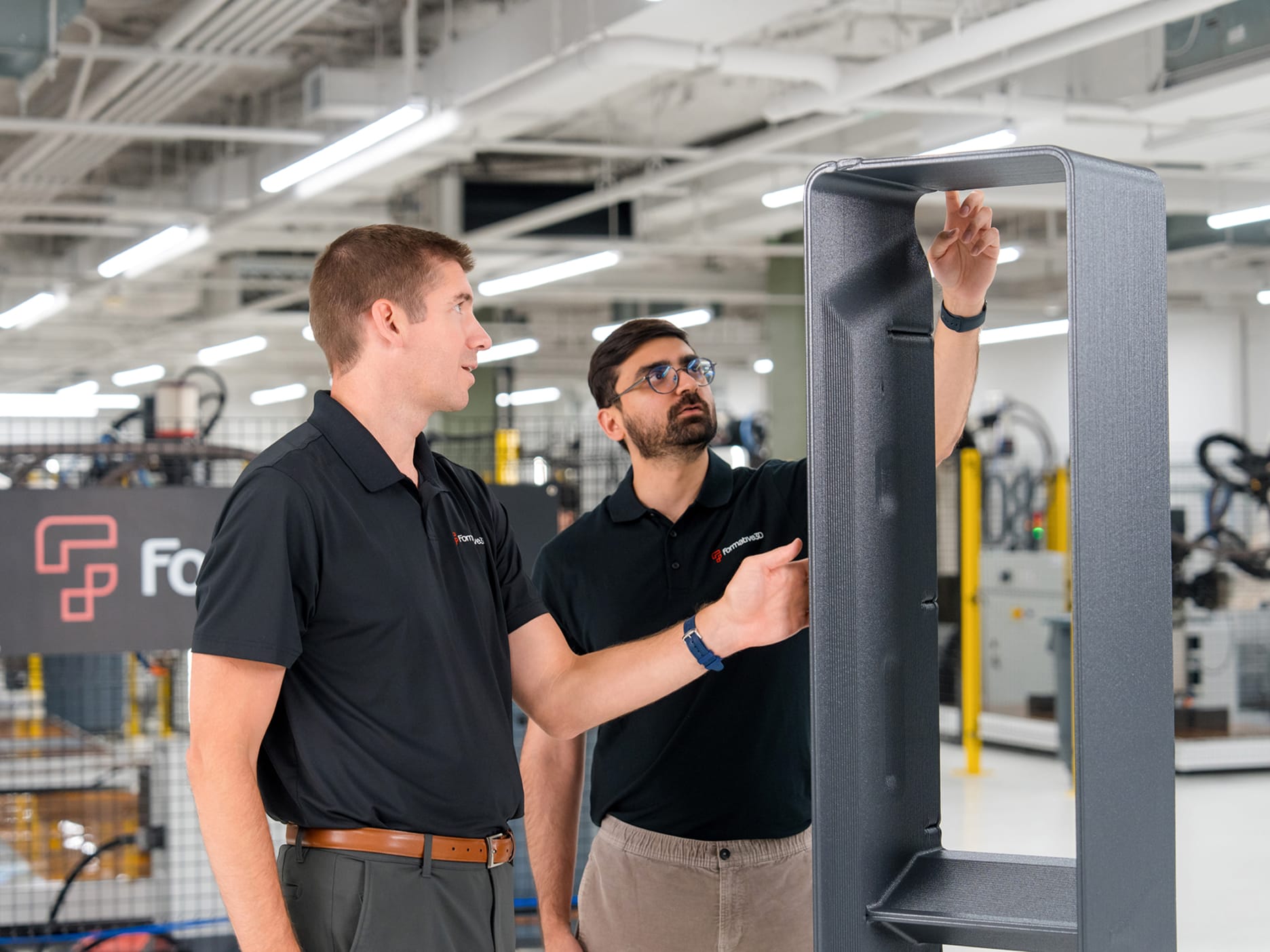
Design, prototype, test, refine and scale – all digitally, all faster. A single flexible infrastructure lets you create a wide range of products without starting from scratch every time.
Customization Down to the Millimeter
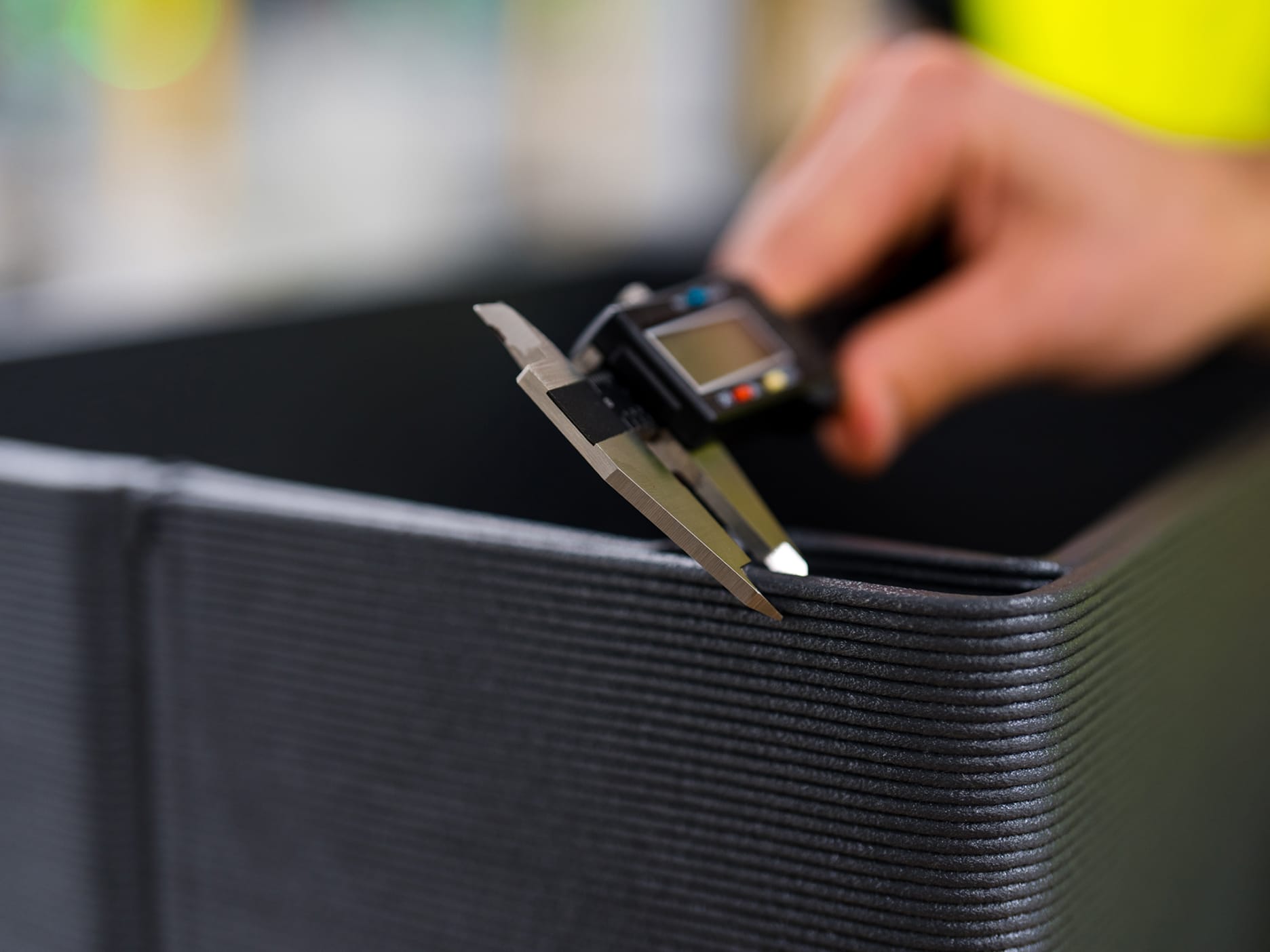
Forget six-inch increments and special-order delays — especially when an “option” turns out to be an expensive customization that extends your lead time. Tailored products that confound traditional manufacturers don’t create the same roadblocks for 3D printers. Many models have variable parameters built in, allowing you to get the precise size, angle or configuration you need — even if you just need one item to fit in a particularly tight space.
Progress With Purpose
Additive technology isn’t just innovative, it’s inherently sustainable in multiple ways:
Progress With Purpose
Additive technology isn’t just innovative, it’s inherently sustainable in multiple ways:
Your Questions Answered
We currently print most products with PETG (polyethylene terephthalate glycol), reinforced with carbon fiber for strength and dimensional performance. We’re also exploring additional sustainable and recycled materials, including custom formulations for specific uses.
At small scales, 3D printing can be time consuming, but large format additive manufacturing changes the game. Scaling up the material flow dramatically increases print speeds, and our growing fleet of robots and traditional printers produces multiple units simultaneously to hit high-volume targets.
Most large-format printed designs are limited by existing software – not vision. We took the opposite approach. By partnering closely with our robotics partners, we’re expanding the software capabilities instead of designing around its constraints. The result: greater precision, more expressive forms, and a level of design quality that raises the bar.
It All Adds Up